
Clear communication is a skill that affects performance reviews, team alignment, relationships, and personal confidence. When emotions, ambiguity, or high stakes make the words hard to find, it’s easy to fall into over-explaining, sounding harsher than intended, or avoiding the conversation altogether. A structure-first toolkit can help turn scattered thoughts into messages that are direct, respectful, and action-oriented—without losing your voice or your values.
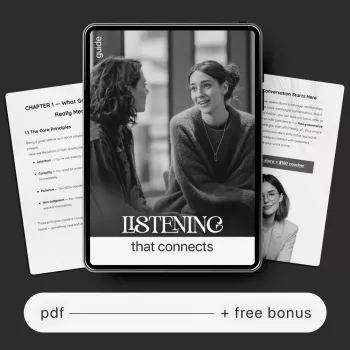
If you want a practical system you can reuse for work and real life, AI That Helps You Say It Better: Digital Guide, eBook & Checklist for Constructive Feedback, Clear Communication, Workplace and Personal Growth Prompts is designed to help you draft, refine, and deliver clearer conversations—especially when the stakes feel personal.
This type of “message architecture” is aligned with widely recommended feedback practices: focus on observable behavior, be specific, and emphasize forward-looking next steps. For deeper background reading, see guidance from Harvard Business Review on giving feedback and the Center for Creative Leadership on feedback that works.
| Situation | What to avoid | A clearer structure |
|---|---|---|
| Late deliverables impacting a project | General blame or labels (“always”, “careless”) | Observation → Impact → Request → Agreement |
| Peer conflict during collaboration | Mind-reading (“you don’t care”) | Specific example → Shared goal → Options → Next step |
| Boundary setting for after-hours messages | Over-explaining or defensiveness | Boundary → Reason (brief) → Alternative → Confirmation |
| Asking for feedback from a manager | Fishing for reassurance | Context → What you want evaluated → Questions → Timeline |
| Apologizing after a misstep | Excuses or self-criticism spirals | Acknowledge → Own impact → Repair plan → Follow-through |
When communication breaks down, it’s often not because someone “can’t communicate,” but because the message is missing one of a few key components: a concrete example, a neutral tone, or a clear next step. A checklist creates a quick pause that turns a reactive draft into an actionable message.
That last point matters more than most people think: some topics escalate in writing and de-escalate in voice. When your goal is alignment (not “winning”), the right channel can be a form of respect.
At work, “saying it better” usually means reducing ambiguity while protecting trust. The most effective messages make it easy for the other person to understand what happened, why it matters, and what “good” looks like going forward.
If you routinely lead meetings, coordinate projects, or deliver performance feedback, keeping a repeatable structure on hand can prevent “rewrite fatigue” and help you show up calmer and more consistent.
For additional context on relationship communication basics, the American Psychological Association’s overview of effective communication is a helpful reference.
Yes. The templates and checklist are designed for workplace communication (feedback, alignment, boundaries) and also transfer well to personal situations like repair conversations and self-advocacy when you need to be clear without escalating.
It uses structure (such as observation, impact, and request) plus tone and intent checks to remove blame-heavy phrasing. That makes it easier to stay grounded, focus on what happened, and end with a next step someone can actually respond to.
Yes. The same core structure can be adapted for different channels, with guidance on when a topic is better handled live and how to follow up in writing with a short, clear summary and next steps.












Leave a comment