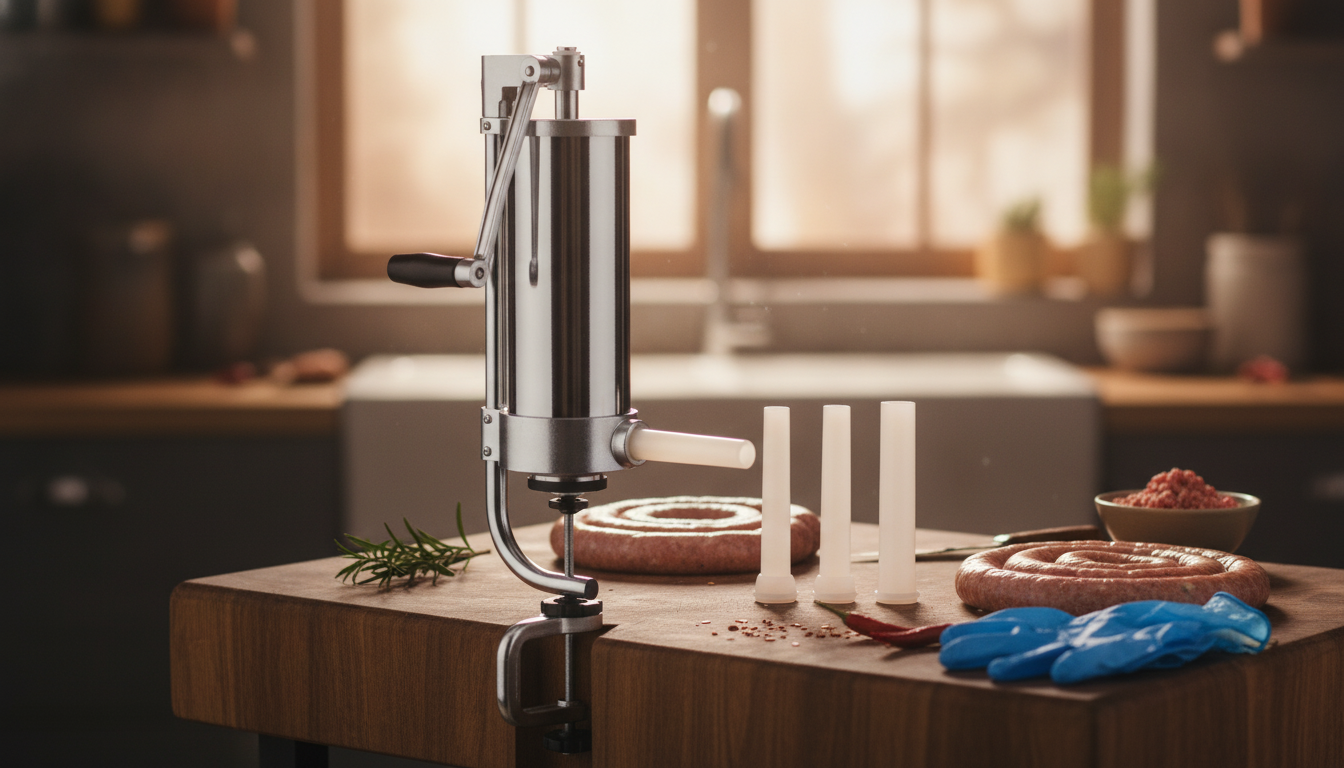
A vertical sausage stuffer can make home sausage-making feel less like a juggling act and more like a repeatable, clean process. Instead of fighting with funnels, spoons, or improvised attachments, a stuffer uses controlled pressure to move seasoned meat smoothly into casings—often with fewer air pockets and far less mess. Below is a practical guide to what a 3L vertical stuffer is best for, how the included stuffing tubes affect the final result, and straightforward tips for setup, stuffing, and cleanup.
A vertical sausage stuffer uses a canister, a piston, and a stuffing tube to push sausage mixture into casings in a steady flow. That steady feed is the big advantage: it helps keep texture consistent and reduces the “surge” that can trap air or cause casing blowouts.
The vertical layout also matters. A vertical canister typically takes up less counter space than wider horizontal designs, and gravity helps guide the mixture down toward the tube. When the mixture stays moving in one direction with consistent pressure, it’s easier to form even links, keep twists uniform, and avoid overworking the meat.
This style of stuffer works well for fresh sausages, bratwurst-style links, and bulk sausage (packed into containers or freezer bags). With a smaller tube, it can also handle narrower styles—especially if the mixture is very cold and well-mixed so it feeds cleanly.
A 3L canister is a sweet spot for many home kitchens because it’s large enough to feel efficient, but not so large that loading, lifting, and cleaning becomes a chore. It’s a practical size for testing seasonings, splitting one batch into multiple flavors, or prepping several meals at a time without tying up the kitchen for an entire afternoon.
For best results, plan around temperature. Keep the mixture cold and work in smaller loads rather than overfilling the canister or letting meat sit on the counter while you troubleshoot. Cold mixture feeds more predictably, smears less, and tends to trap less air.
| Canister volume | Typical meat mixture by weight | Good for |
|---|---|---|
| 3 liters | ~2.5–3.0 kg (5.5–6.6 lb) depending on density | Home batches, variety runs, weekend meal prep |
| 1–2 liters | ~0.8–2.0 kg (1.8–4.4 lb) | Small tests, single-family dinner |
| 5+ liters | ~4.0+ kg (8.8+ lb) | Frequent large batches, events, bulk freezing |
Having multiple tube sizes is what turns one stuffer into a flexible tool. Different casings and sausage styles behave differently, and tube choice directly affects how smoothly the mixture feeds.
A mismatch creates problems quickly. A tube that’s too large can overstretch casings, making them harder to handle and more likely to split. A tube that’s too small increases back-pressure, which can smear the mixture and affect the final bite. A reliable workflow is to match the tube to the casing first, then adjust the mixture (grind size, fat ratio, chill time) so it feeds without forcing the handle.
Small design details have a big impact once you’re mid-batch and your hands are busy.
Sanitize food-contact surfaces after washing, especially when working with poultry or mixed meats. During the session, keep raw sausage mixture out of the temperature “danger zone” by working in smaller loads and returning the bowl to the refrigerator between fills. For detailed handling guidance, refer to USDA FSIS: Sausage and Food Safety and storage timing recommendations from FDA: Refrigerator & Freezer Storage.
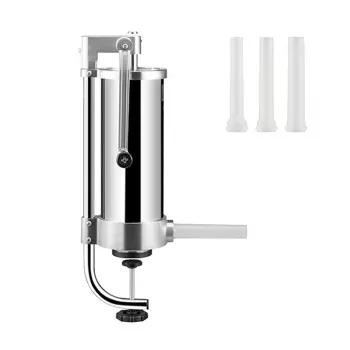
If you’re ready to upgrade your workflow, the Vertical Sausage Stuffer with 3L Capacity & 3 Stuffing Tubes is designed for controlled, consistent stuffing in practical home batches. The 3L canister size helps you work efficiently without feeling oversized for a typical kitchen, and the three included tubes add flexibility across casing sizes and sausage styles.
You can make fresh links like bratwurst-style sausages, Italian-style links, and breakfast sausage, plus bulk sausage for patties or recipes. Narrower sausages are also possible depending on tube size and casing choice, but they work best with a well-chilled mixture for smooth feeding.
Choose a tube that matches the casing size so the casing slides on easily without stretching too tight. If the tube is too small, pressure increases and the mixture can smear; if it’s too large, casings can overstretch and split.
Keep the mixture cold, remove air during loading, and maintain a steady pace instead of forcing the handle when resistance spikes. Avoid overfilling the casing and stop to vent trapped air if needed before continuing.











Leave a comment