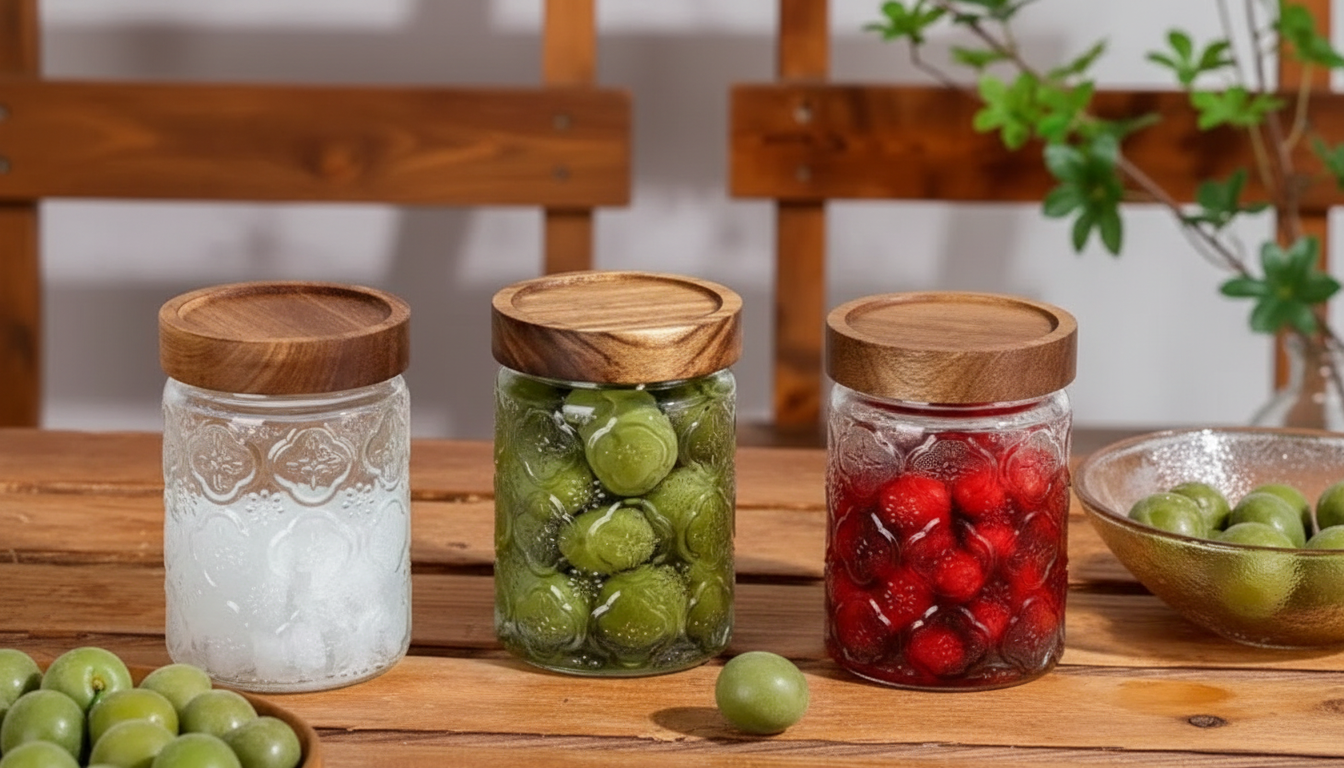
An embossed glass container is a glass jar, bottle, or storage vessel with a raised design formed directly into the glass surface. Instead of being printed or labeled on top, the pattern, lettering, or logo is molded so it stands out in relief. You can feel the texture with your fingertips, and the design stays visible even if the container gets wet, chilled, or handled frequently.
Embossing is created during manufacturing, typically when molten glass is pressed or blown into a mold that contains the design. As the glass cools, it “locks in” the raised details. Because the decoration is part of the container itself, it won’t peel, rub off, or fade the way some inks, decals, or adhesives can over time.
Embossed glass shows up in packaging and home storage because it combines function and appearance. Common uses include:
Embossing adds a premium, tactile look while helping with identification—raised lettering can distinguish products on a shelf or in a cabinet. It also supports branding without relying solely on a paper label. For reusable containers, embossing can keep the container recognizable even after labels are removed, making it popular for refill programs and long-term storage.
For more details and examples, visit the full guide on embossed glass containers.
For Embossed Glass Containers Explained: Uses & Benefits, the best answer depends on fit, material, care instructions, and how the product will be used day to day.
Embossed glass has raised designs formed by a mold, while etched glass has designs cut or frosted into the surface, creating a recessed or matte texture. Embossing is typically thicker and more dimensional; etching is usually finer and flatter.








Leave a comment